


How Spare Parts Support Predictive Maintenance
In this article:
- What Does Predictive Maintenance Mean?
- Turn Maintenance Alerts into Parts Decisions
- Choose Spares According to Operational Risk
- Match Supply Times to Your Maintenance Window
- Make Stored Replacements Ready for Installation
- Use Completed Repairs to Refine Spare Stock
- How CJS Automation Supports Your Spares Planning
Predictive maintenance helps service engineers anticipate developing faults by analysing equipment condition. Changes in vibration, temperature, and other operating data let you investigate before a breakdown occurs.
Yet an early warning only takes you so far. If you can’t source, check, and prepare a replacement component within that window, a planned intervention may still become an urgent repair.
Having suitable spare parts available allows maintenance teams to address faults identified through predictive monitoring. That means deciding what to keep in stock, ordering other components in time and preparing replacements for installation.

What Does Predictive Maintenance Mean?
Predictive maintenance uses equipment condition data and analysis to anticipate developing faults and estimate when maintenance may be needed. By tracking changes in vibration, temperature or electrical performance, engineers can identify patterns that suggest deterioration.
Rather than relying solely on a fixed servicing schedule, this approach helps teams plan work around a component’s likely condition. It cannot predict every failure or provide an exact replacement date, but it can offer time to investigate a problem and arrange suitable spare parts before intervention becomes urgent.
To compare this approach with other methods, our guide to industrial maintenance strategies explains the options available and where each may suit your equipment.
Turn Maintenance Alerts into Parts Decisions
A monitoring alert should prompt an engineering assessment before anyone places an order. For example, rising motor temperature could reflect a cooling problem or excessive load; replacing a motor without identifying the cause may leave the issue unresolved.
Once engineers identify that a replacement is required, confirm exactly which part the machine needs. Include the asset reference, full manufacturer code, specification and approved alternatives.
Procurement can then check availability while maintenance confirms the work required. Assign responsibility for reserving or ordering that component, so an alert does not sit in a report while everyone assumes someone else has acted.
Choose Spares According to Operational Risk
Buying a replacement for every installed component can tie up considerable money and storage space. A more selective approach considers what each part supports, how readily you can obtain it, and whether its failure provides a reliable warning.
Prioritise components that:
- Support equipment with no backup.
- Have lengthy or uncertain supplier lead times.
- Require a specific version or configuration.
- Serve several machines, creating demand for a shared spare.
Condition data can help refine these decisions, but it should sit alongside failure history and engineering judgement. Some electronic faults occur suddenly, so predictive monitoring doesn’t eliminate the need for critical stock.
Match Supply Times to Your Maintenance Window
Compare the estimated intervention window with the total time needed to obtain and prepare a replacement. Include purchasing approval, delivery, inspection and any configuration work.
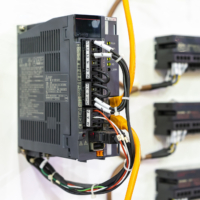
Consider a hypothetical servo drive replacement required within three weeks. A supplier quotes two weeks for delivery, but internal approval and preparation require another week. That leaves no allowance for delays.
Such a component may justify an on-site spare or an agreed supply arrangement before a warning appears. Readily available items with longer, dependable warning periods may suit purchasing after diagnosis.
Confirm availability for the exact unit required. A catalogue listing alone does not establish stock, dispatch timing or compatibility. For discontinued components, discuss sourcing options early rather than relying on a previous quotation.
Make Stored Replacements Ready for Installation
A spare on a shelf should have a clear route into service. Check voltage, ratings, connections, hardware revision and firmware requirements where applicable. Similar product names do not guarantee interchangeability.
For programmable equipment, maintain accessible backups of the relevant programs and parameters. Record any commissioning steps needed alongside the component’s storage location.
Storage also matters. Follow manufacturer guidance on packaging, environmental conditions and inspections; some drives require specific procedures after extended storage.
Before a planned shutdown, reserve the chosen unit against the work order and confirm that associated connectors, cables or accessories are available. This gives engineers a complete replacement package when work begins.
Use Completed Repairs to Refine Spare Stock
After installation, update inventory promptly and review whether the withdrawn unit can be repaired for future use. Record its condition and test status clearly before returning it to available stock.
Compare the original diagnosis with what engineers found. Was the expected component replaced? Did another item become necessary? Were several machines competing for one spare?
These findings help adjust stock quantities and improve future parts selection.
How CJS Automation Supports Your Spares Planning
At CJS Automation, we supply new and refurbished automation parts, including current and obsolete lines, along with repair and exchange services.
If you are reviewing spares for monitored equipment, contact our team with part codes, specifications and required dates. We can help establish sourcing options, giving you a clearer basis for purchasing decisions.
Start with a small group of critical assets. Preparing their replacements gives your maintenance team a practical starting point and a stronger foundation as your predictive maintenance strategy develops.




 GB
 US
 DE
 DK
 ES
 FI
 FR
 IT
 NL
 NO
 PT
 SE