


A Practical Guide to Industrial Maintenance
In this article:
- How One Failed Part Can Stop Production
- Choosing a Maintenance Strategy to Match Risk
- Identifying Components That Need Priority
- Preparing Spares for a Faster Recovery
- Building Reliability Into Routine Processes
A production line depends on many components working together. When one fails, disruption can extend well beyond the machine where the fault began. A stopped conveyor might leave upstream equipment unable to discharge products, while packaging stations further along run out of material.
Industrial maintenance strategies help you decide what to inspect, when to intervene and how to prepare for breakdowns. For maintenance managers and procurement teams, understanding those connections provides a useful starting point.
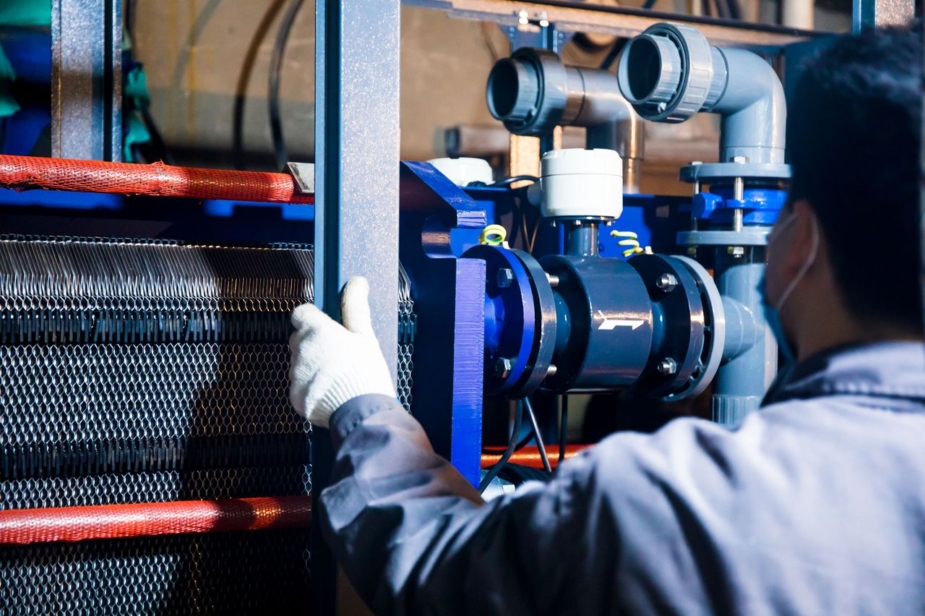
How One Failed Part Can Stop Production
Consider a conveyor drive failure on a food production line. Movement stops immediately, but adjacent machines may continue briefly until accumulation limits or control interlocks stop them. Downstream equipment finishes whatever remains in its buffer, then waits.
The repair bill captures only part of the impact. Depending on the process, unfinished products may need checking or disposal; temperature-sensitive batches could require assessment. Cleaning, resetting equipment, and confirming product quality can further delay production after a replacement is fitted.
Buffers sometimes provide breathing space. But if repairs take longer than that allowance, a local stoppage becomes a wider production problem.
This is why maintenance priorities should reflect a component’s role in your process, not just its purchase price.
Choosing a Maintenance Strategy to Match Risk
No single approach suits every part within an automated system. The key is to understand different maintenance strategies and assess which best suits each component. These include reactive, preventive, predictive, condition-based and reliability-centred maintenance.
Reactive Maintenance
Work begins after failure. Running to failure can be reasonable for inexpensive, non-critical items when replacement is straightforward, and consequences are acceptable. For equipment supporting an entire line, that decision needs closer scrutiny.
Preventive Maintenance
Maintenance tasks are carried out at planned time or usage intervals. Manufacturer-recommended inspections, lubrication and cooling fan checks fit this approach. Scheduling work around planned shutdowns helps control disruption, although a calendar cannot anticipate every fault.
Condition-Based and Predictive Maintenance
Condition-based work responds to measured deterioration; predictive methods use trends or models to anticipate future problems. Either requires useful warning signs and enough time to act.
Reliability-Centred Maintenance
This approach considers equipment functions, failure modes and their consequences before selecting suitable tasks. Different assets may therefore receive different forms of attention.
For example, a manufacturer might replace inexpensive indicator lamps only when they fail, inspect conveyor bearings at scheduled intervals and monitor vibration on a critical motor. The right approach depends on the consequences of failure, the warning signs available and how quickly repairs can be completed.
Identifying Components That Need Priority
Start by tracing what happens when each key asset stops. Does another machine depend on its output? Can production switch routes? How long will available buffers last?
Then consider failure history, safety implications, product losses and replacement lead times. A rarely failing PLC power supply may deserve more attention than a frequently replaced item if losing it stops several machines and no spare is available.
Research supports taking a more planned approach. In a manufacturing maintenance survey by NIST researchers Thomas and Weiss, respondents in the half spending proportionally less on reactive maintenance had 52.7% less unplanned downtime than those in the more reactive half. That comparison shows an association, not proof that a particular strategy will deliver equivalent savings at every site.
A practical assessment combines those broader findings with evidence from your own breakdown records.
Preparing Spares for a Faster Recovery
Even well-maintained equipment can fail unexpectedly. Having suitable replacement parts available can make the difference between a short interruption and an extended shutdown.
For priority parts, record exact product codes, hardware revisions and firmware requirements. Keep accessible backups of relevant programmes and drive settings. A physically compatible replacement may still require configuration before production can resume.
Stock also needs care. Follow storage instructions and review spare condition at suitable intervals. Where alternatives are proposed, confirm compatibility before an emergency leaves little room for investigation.
Building Reliability Into Routine Processes
After a breakdown, investigate why it happened. Repeated drive faults, for instance, might point to excessive load or inadequate cabinet cooling. Replacing damaged units without addressing the cause leaves that pattern unresolved.
Track unplanned stoppage hours, repeat failures and time taken to restore production. Review those measures with engineering and operations colleagues, then use your findings to adjust inspection intervals, resolve recurring problems or revise spare stock levels. Assign responsibility for each action and check whether it improves performance.
That review should also reveal where sourcing delays are extending downtime. If a critical component has been discontinued, understanding how to find discontinued automation parts can help you assess sourcing options before deciding whether to hold a spare or confirm an alternative.
At CJS Automation, we help customers source current and discontinued automation components. If your maintenance review identifies gaps in spare parts availability, contact our team with your part numbers and requirements. We can help you investigate suitable replacement options before a breakdown makes sourcing urgent.





 GB
 US
 DE
 DK
 ES
 FI
 FR
 IT
 NL
 NO
 PT
 SE